Recent votes by World Sailing Event and Equipment Committees indicate a growing realisation that Sailing faces a strong headwind to remain in the Olympics.
And if it is to remain an Olympic sport – since 1900 – that version of sailing could look very different to what we see at sailing clubs every weekend.
Not that Olympic sailing has had much to do with club sailing since it went professional – in the UK – in 1997 with the introduction of National Lottery funding, now known as the Athlete Performance Award (APA), managed by the RYA via the British Sailing Team.
At that point British sailing got serious, and jumping into an Olympic class boat for a last minute punt at the trials became a thing of the past . . . quickly reflected in a shed-load of medals, while the rest of the world played catch-up.
The International Olympic Committee (IOC) was facing its own problems which it is determined to survive. What had been a wishy-washy progress through ‘popular’ versions of traditional sports, and cameo sports appearances to raise interest, was being overtaken by the rapid change in media presentation effecting its once untouchable commercial interests. Plus a changing public interest/attitude to many heritage sports.
That has all changed . . . in June this year new IOC President Kirsty Coventry introduced the Fit for the Future policy document at the 146th IOC Session in Lausanne, Switzerland. This initiative refocuses the IOC on its core mission with a comprehensive strategic reform and direction framework, introduced to guide the Olympic Movement toward a reset for Brisbane 2032.

In the wide ranging document several points stand out . . .
- The Olympic Movement cannot be everything to everyone and must concentrate efforts where it can have the greatest impact
- Disciplines will be assessed against core criteria: global appeal; cost and operational complexity; athlete representation.
- Sustained relevance requires digital-first content
- Shorter formats, athlete- and creator-led storytelling, and selective esports integration.
Points which are also relevant and indispensable to World Sailing if it is to remain in the Olympic movement.
World Sailing quickly recognised that Sailing could have difficulty meeting the new IOC remit for Brisbane 2032.
Olympic Sailing is not a quick fix event . . . it is a very different sport to the vigorously hyped America’s Cup and SailGP events, with their made for media circuits and formats featuring considerable jeopardy.
It requires its own location with considerable technical resources, performance is weather dependent, and has little media presence outside specialist formats. It also attracts little spectator cross-sport interest due to the complex and varied race formats involving unique scoring methods.
The sweeping IOC review has come at a time when several existing Olympic sailing classes are being evaluated, and sailing (in its widest sense) is undergoing major change, with boards, foils and additional sailing methods being developed, often outside traditional class and club structures.

The recent recommendation by the World Sailing Event and Equipment committees to replace Formula Kite (kite foiling) itself only introduced in the 2024 Paris Games, with a Wingfoil board, a popular ‘beach’ combination that has developed a keen racing circuit, looks panicked. And the committees request for more time, belatedly recognises that it will take more than a few rule tweaks to keep Sailing in the Games.
The recent IOC decision to confirm the incumbent disciplines for the Brisbane 2032 Olympic programme in December 2026, together with those that will proceed to the combined comparison phase** and those that will be dropped, has put everyone on notice that the IOC is looking for a sharper and more focused Games, with heritage sports facing reappraisal and having to justify their place in six years time.
Sailing is listed in the initial programme for Brisbane 2032, but could fall foul of the more focused guidelines of the Fit for the Future policy as the IOC looks to remove sports that have failed to move with modern expectations.
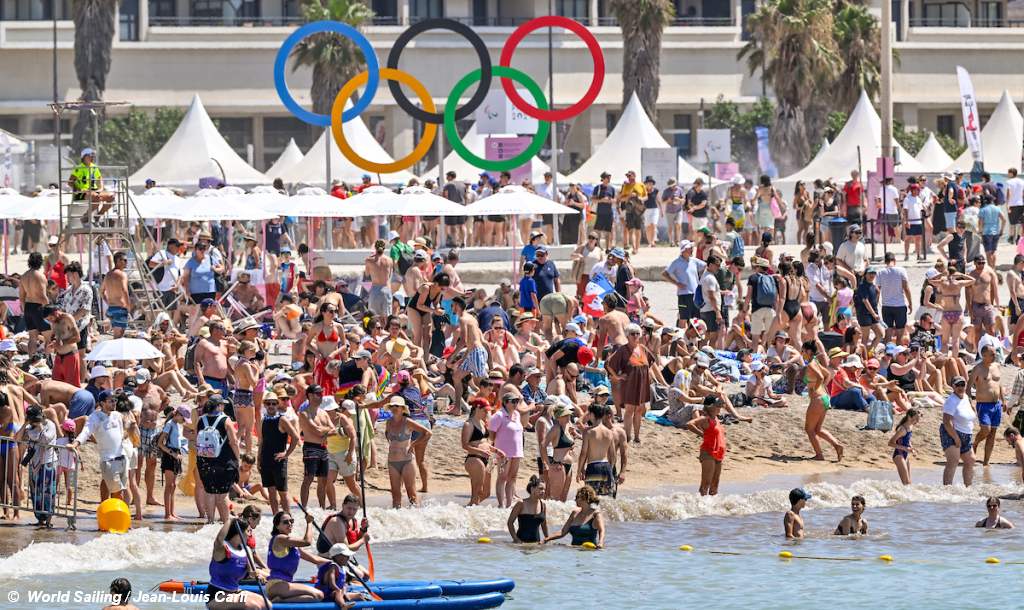
Removal from the Games is considered unlikely, but a major revamp of the equipment and racing format could be the price of retaining Olympic status.
This is more than just the loss of a two week regatta. It would have a major financial impact on World Sailing and through them the National Member Associations and the professional Olympic sailors. All are dependent on the income stream that sailing’s Olympic status brings.
If an acceptable solution is not found, perhaps requiring what is presently considered the unthinkable. Sailing in the Olympics could become at best a token extension to the surfing events.
World Sailing General Assembly and World Council will make their final, binding votes on Regulation 11.5, which determines which equipment and formats are locked in or replaced for the Brisbane 2032 Olympic Games, at the World Sailing Annual Conference in Qingdao, China, on the 21 November 2026.
Note:
** This evaluation stage directly assesses the suitability of existing (incumbent) Olympic disciplines alongside newly proposed candidate disciplines to determine the final sports programme for upcoming Games.
Related Post . . .
World Sailing Events/Equipment Committee votes for Wingfoil to replace Formula Kite
Interesting Times . . . Can Sailing survive tsunami of change hitting Olympic Sports?